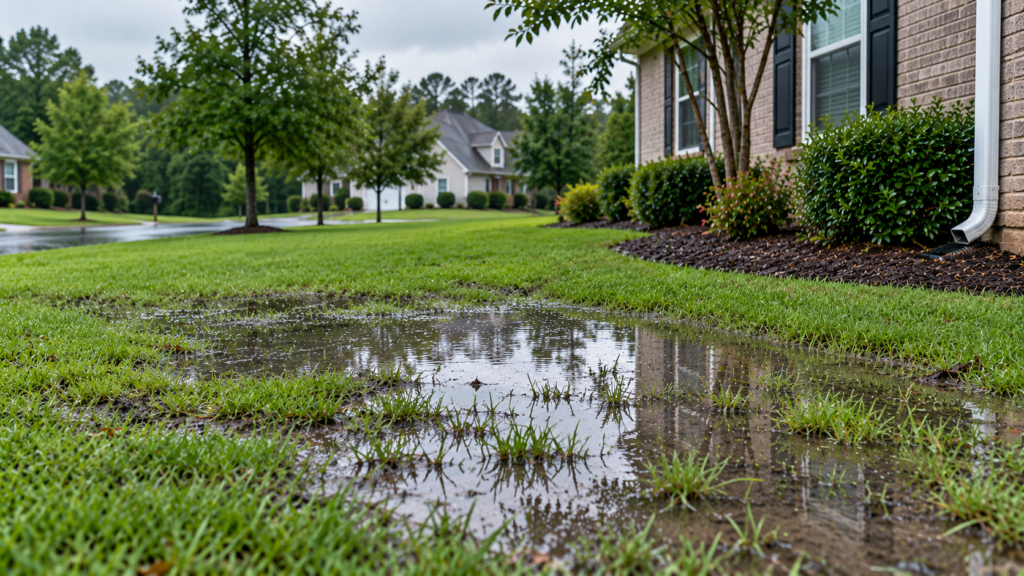
Standing Water in Your Yard in Rock Hill, SC
Help for standing water, soggy grass, low spots, runoff, and drainage problems around homes in Rock Hill, SC and surrounding areas.
Standing Water in Yard Rock Hill SC: Common Causes
Standing water in a yard is a symptom of a drainage problem rather than the problem itself. Water may collect because the yard is too flat, the grade directs water toward a low area, runoff is flowing toward the property, or water is being discharged into the wrong location. Identifying the source is the first step toward choosing the right drainage solution.
Carolina Yard Drainage helps connect homeowners in Rock Hill, SC with appropriate solutions for standing water and yard drainage problems. The right approach depends on where excess water originates, how it moves across the property, and the conditions affecting the site.
Common Signs of a Standing Water Problem
Some drainage problems are obvious immediately after a storm, while others show up as repeated soggy areas or slow-draining soil. Common signs include:
- Puddles that remain long after rainfall ends
- Soggy or muddy grass that is difficult to mow
- Water collecting near the foundation
- Low spots that repeatedly fill with water
- Runoff flowing across patios, driveways, or walkways
- Soil erosion or washed-out landscaping
- Downspouts creating wet areas near the home
- Areas of lawn that stay wet while the rest of the yard dries
What Causes Standing Water in a Yard?
There is no single cause of standing water. Identifying the source matters because different water problems require different drainage solutions.
Low Spots and Poor Yard Grading
Water naturally moves downhill. If part of the yard sits lower than the surrounding ground, runoff can collect there instead of continuing toward a safe drainage area. Improper grading can also cause water to flow toward the house rather than away from it.
Heavy Surface Runoff
Sloped lots, neighboring properties, driveways, patios, and other hard surfaces can concentrate runoff into one area. When more water reaches a low point than the soil can absorb, standing water can form.
Downspout and Roof Runoff
Downspouts can release a large amount of roof water into a relatively small area. If that water is discharged beside the foundation or into a low section of lawn, it can contribute to recurring puddles, erosion, and soggy soil.
Groundwater and Saturated Soil
Some yards remain wet because excess moisture is moving through the soil rather than simply across the surface. In those situations, the ground may stay soft or saturated even after visible surface water disappears.
Compacted or Slow-Draining Soil
Compacted soil and clay-rich conditions can slow infiltration and make it harder for rainfall to soak into the ground. This does not automatically mean an underground drain is needed, but soil conditions can contribute to how long water remains in a problem area.
Which Drainage Solution Fixes Standing Water?
The best solution depends on where the water comes from and how it moves. A drainage system should address the source of the problem rather than simply move visible puddles from one location to another.
Catch Basin Drainage
Catch basins can work well when surface runoff collects at a defined low point. The basin captures water through a grate and carries it away through underground drainage pipe.
French Drain Installation
French drains are generally better suited for groundwater and excess moisture moving through saturated soil. They collect water below the surface and redirect it toward a suitable outlet.
Underground Downspout Drainage
When roof runoff is contributing to wet areas, downspouts can be connected to buried drainage pipe that carries concentrated water farther away from the home.
Yard Grading & Drainage Correction
When the shape or slope of the yard causes water to collect or flow toward the house, grading can help create a more effective surface drainage path.
Some properties need a combination of these methods. For example, grading may direct surface water toward a catch basin while downspout drainage keeps roof runoff from adding to the same problem area.
Why Standing Water Should Not Be Ignored
Occasional puddling after an unusually heavy storm does not always indicate a serious drainage issue. Repeated standing water, however, can make parts of the yard difficult to use and may contribute to erosion, damaged landscaping, muddy conditions, and moisture collecting too close to the home.
The longer a drainage problem continues, the more obvious the water path often becomes. Repeated runoff can deepen low areas, wash away soil, and concentrate even more water into the same location during future storms.
Standing Water and Rock Hill Drainage Conditions
Rock Hill properties can experience standing water for several reasons, including heavy rainfall, sloped lots, compacted clay soil, poor grading, roof runoff, and drainage from neighboring properties. These conditions can cause water to collect in low areas or move slowly through the soil, leaving portions of a yard wet long after the rain has stopped.
A small difference in grade can determine whether water continues across the yard or collects in one place. That is why the visible puddle alone does not always reveal the real cause of the drainage problem.
How a Standing Water Problem Is Evaluated
1. Find Where the Water Comes From
Rainfall runoff, surrounding slopes, downspouts, driveways, patios, neighboring grades, and saturated areas can all help identify where water originates.
2. Follow the Water Path
The way water reaches and leaves a problem area helps determine whether the issue involves surface runoff, groundwater, poor grading, roof drainage, or several causes working together.
3. Identify a Suitable Outlet
Any drainage system needs somewhere appropriate for collected water to go. Outlet location, property slope, and surrounding conditions are considered before choosing the drainage method.
4. Match the Solution to the Cause
The objective is to use the simplest practical drainage approach that controls the actual source of the water rather than automatically installing the same system in every yard.
Standing Water in Yard FAQs
Why does my yard hold water after it rains?
Water can remain standing when rainfall collects faster than the soil can absorb it or when the property does not provide a clear path for runoff to drain away. Common causes include low areas, compacted or clay-heavy soil, poor grading, concentrated roof runoff, and water entering from neighboring properties. The source and movement of the water determine which drainage solution is most appropriate.
Will a French drain fix standing water?
A French drain can fix some standing water problems, especially when excess water is moving through saturated soil or collecting along a predictable path. However, standing water caused by surface runoff, roof drainage, or improper grading may be better addressed with a catch basin, underground downspout drainage, grading correction, or a combination of solutions. The cause of the water problem should determine the drainage system used.
How long should water stand in a yard after rain?
Some temporary surface water immediately after heavy rain can be normal, but large puddles that remain for a day or longer—or areas that stay consistently soggy between storms—can indicate a drainage problem. How quickly a yard dries depends on rainfall, soil type, slope, sun exposure, and where runoff is able to flow.
Can grading fix a wet yard?
Yes, grading can improve a wet yard when the problem is caused by low spots or a slope that directs runoff toward the wrong area. Regrading can create positive drainage so water moves away from the home and toward a suitable outlet. In some yards, grading works best when combined with a catch basin, French drain, or another drainage system.
Can downspouts cause standing water?
Yes. Downspouts can discharge a large amount of roof runoff into a concentrated area beside the home. If that water cannot drain away quickly, it can create puddles, saturated soil, erosion, or water near the foundation. Extending downspouts underground to a suitable discharge point can help move roof runoff away from problem areas.
Need Help With Standing Water in Your Yard?
If standing water is creating problems around your property, submitting an estimate request is a simple way to start the process of finding an appropriate drainage solution.