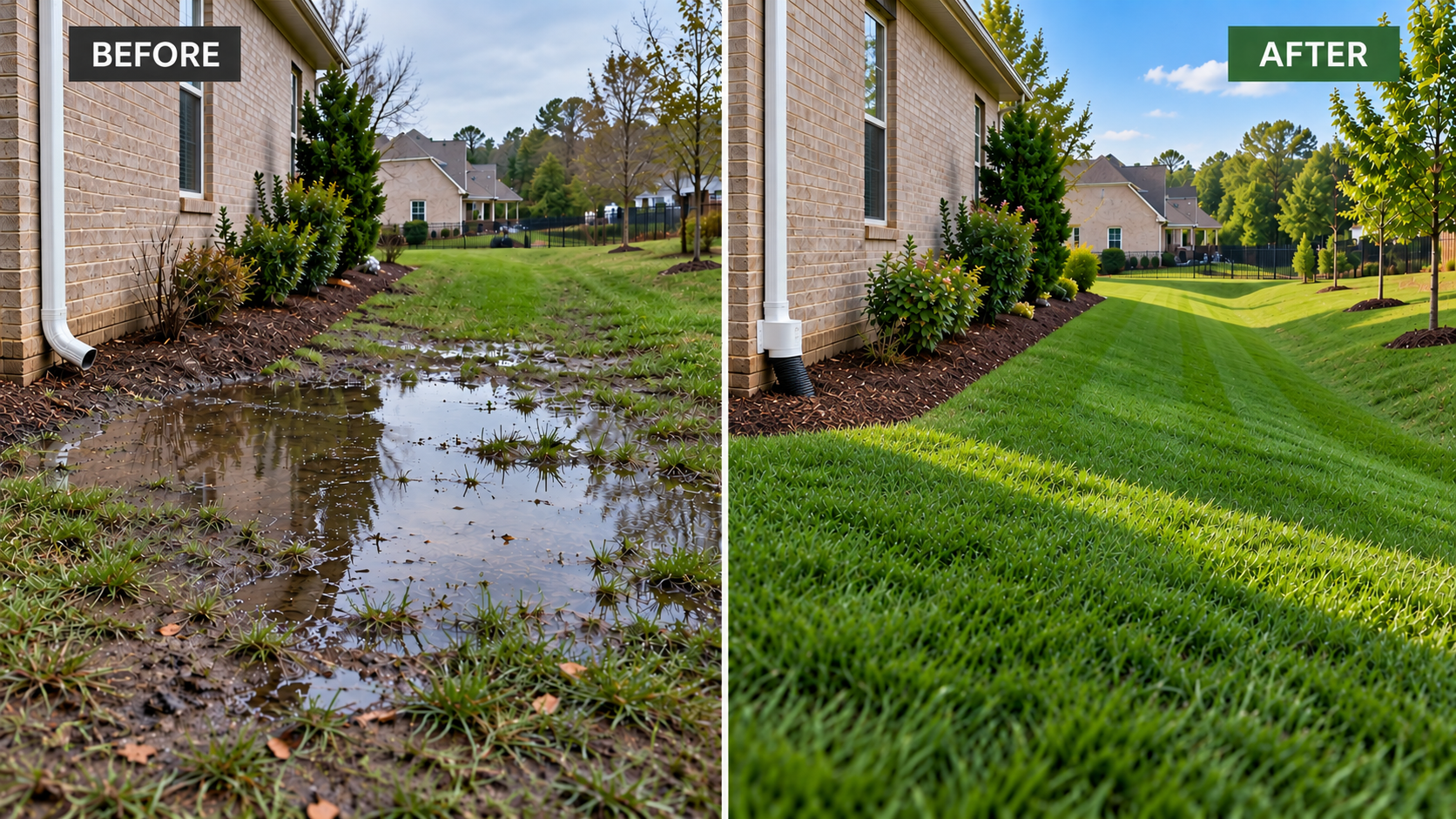
Yard Grading & Drainage in Rock Hill, SC
Yard grading and drainage solutions for standing water, poor runoff, low spots, erosion, and water flowing toward homes in Rock Hill, SC and surrounding areas.
Yard Grading Rock Hill SC Solutions for Homeowners
Water does not always need a drain pipe to become a problem. In some yards, the shape and slope of the ground causes rainwater to collect in low areas, flow toward the foundation, wash away soil, or remain trapped in the lawn after storms.
Carolina Yard Drainage helps connect homeowners in Rock Hill, SC and surrounding communities with appropriate grading and drainage solutions for runoff, standing water, and poor yard slope.
Signs Your Yard May Need Grading or Drainage Correction
Improper grading can create drainage problems even when gutters, downspouts, and other drainage components are working correctly. Common signs include:
- Water consistently flowing toward the house
- Standing water in low areas after rainfall
- Soggy sections of lawn that drain slowly
- Soil erosion or washed-out areas
- Low spots that repeatedly collect water
- Mulch, soil, or debris washing downhill
- Runoff concentrating near patios, walkways, or foundations
Not every wet yard needs to be completely regraded. The source of the water, existing slope, soil conditions, and available discharge locations should be evaluated before deciding how much grading or drainage work is appropriate.
How Yard Grading Improves Drainage
Proper grading uses the shape and elevation of the ground to encourage surface water to move away from structures and problem areas. Soil may be added, removed, or redistributed to create a more effective drainage path.
The goal is not simply to make the yard look level. A drainage grade should provide controlled fall so runoff moves toward an appropriate outlet without creating erosion or transferring the problem to another part of the property.
Yard Grading & Drainage Process
1. Evaluate How Water Moves Across the Property
The first step is identifying slopes, low areas, foundation elevations, runoff routes, neighboring grades, and areas where water collects after rainfall.
2. Identify the Cause of the Drainage Problem
The cause of the drainage problem is identified by determining whether the primary issue is poor grading, concentrated runoff, groundwater, roof drainage, or a combination of several water sources.
3. Establish a Better Drainage Path
Where grading is appropriate, the ground is reshaped to encourage water to move away from the home and toward a suitable drainage area. The amount of correction depends on the existing elevations and conditions of the property.
4. Combine Grading With Drainage When Needed
Some properties need more than grading alone. Catch basins, French drains, or underground downspout drainage may be incorporated when water needs to be collected or carried beyond what surface grading can accomplish.
Where Yard Grading Works Best
Yard grading and drainage work can be particularly useful when water problems are caused by the slope of the property or when surface runoff naturally flows toward the home, foundation, or low areas of the yard. Depending on the site, grading may help with:
- Low areas that collect rainwater
- Ground sloping toward the foundation
- Surface runoff crossing lawns or landscaped areas
- Minor erosion caused by uncontrolled runoff
- Uneven areas that trap water after storms
- Drainage problems created by settled soil
Yard Grading and Rock Hill Drainage Conditions
Properties around Rock Hill can have a combination of sloped terrain, compacted soil, clay-heavy soil, established landscaping, and concentrated runoff during heavy rainfall. These conditions can make relatively small grading problems noticeable when water repeatedly follows the same path across a yard.
Effective grading should account for the entire drainage pattern rather than simply filling a wet spot. Raising one area without understanding where the water will go next can move the problem somewhere else on the property.
Yard Grading vs. Other Drainage Solutions
Grading is one way to control water, but the best drainage solution depends on where the water originates and how it moves.
Yard Grading
Best suited when the shape or slope of the ground causes surface water to flow toward the home or collect in low areas.
Catch Basins
Useful for collecting concentrated surface runoff at a defined low point and carrying it away through underground drainage pipe.
French Drains
Generally better for managing groundwater and excess moisture moving through saturated soil.
Downspout Drainage
Designed to carry concentrated roof runoff away from the home through buried drainage pipe.
Many drainage problems involve more than one source of water, so a property may benefit from combining grading with one or more drainage methods.
How Much Does Yard Grading & Drainage Cost?
The cost of yard grading and drainage depends on the size of the area being corrected, the amount of soil that must be moved or added, accessibility, existing landscaping, drainage requirements, and whether additional drainage components are needed.
A property-specific evaluation can help determine whether grading alone may correct the drainage problem or whether the project may require a combination of grading and drainage improvements. The scope of work can then be used to develop an appropriate estimate.
Why Choose Carolina Yard Drainage?
Property-Specific Solutions
Water movement across the property, low areas, runoff patterns, and available drainage routes all help determine which grading or drainage solution is appropriate.
Focused on Water Flow
The goal is to create a practical drainage path rather than simply filling low areas or moving soil without addressing the cause.
Local Yard Drainage Service
Carolina Yard Drainage helps connect homeowners in Rock Hill, SC and surrounding areas with appropriate solutions for yard grading and drainage problems.
Yard Grading & Drainage FAQs
Will grading fix standing water in my yard?
Grading can help when standing water is caused by low areas or improper surface slope. If groundwater, roof runoff, or another water source is contributing to the problem, additional drainage may be needed.
Should my yard slope away from my house?
In general, the ground immediately around a home should encourage surface water to move away from the foundation rather than toward it. The appropriate grading depends on the property and available drainage path.
Can you grade a yard without installing drainage pipe?
Yes. Some drainage problems can be improved through surface grading alone when there is enough elevation change and a suitable location for runoff to travel. Other properties may require grading combined with a drainage system such as a catch basin, French drain, or downspout drainage.
Can grading and French drains be used together?
Yes. Grading can manage surface runoff while a French drain addresses groundwater or excess moisture moving through saturated soil. The right combination depends on the source of the drainage problem.
Will adding topsoil fix a low spot?
Adding soil may help in some situations, but simply filling a low area without considering surrounding elevations can redirect water somewhere else. The entire drainage path should be considered before changing the grade.
Need Help With a Yard Grading or Drainage Problem?
If standing water or soggy ground is creating problems around your property due to poor grading, submitting an estimate request is a simple way to start the process of finding an appropriate drainage solution.