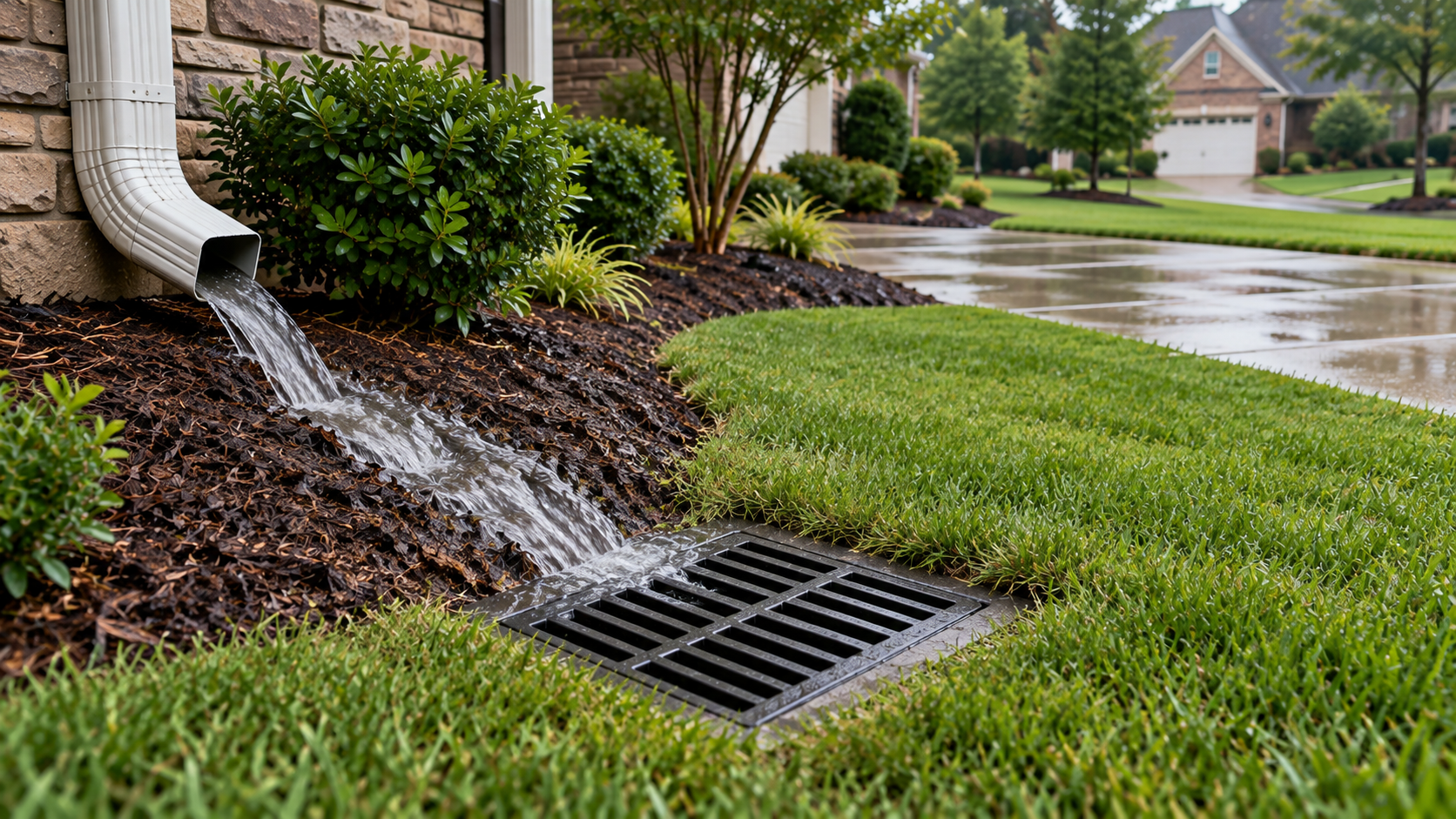
Catch Basin Drainage in Rock Hill, SC
Catch basin installation for standing water, low spots, runoff, patios, driveways, downspouts, and surface drainage problems in Rock Hill, SC and surrounding areas.
Catch Basin Drainage Rock Hill SC: Solutions for Standing Water
Catch basin drainage in Rock Hill, SC can help manage standing water and surface runoff that collects in low spots around your property. Catch basins provide a defined collection point where surface water can enter an underground drainage system and be carried away from the problem area.
Carolina Yard Drainage helps connect homeowners in Rock Hill, SC and surrounding communities with solutions for catch basin drainage problems. Proper basin placement and drainage routing depend on where runoff comes from, where it naturally collects, and where the water can be safely discharged.
Signs You May Need a Catch Basin
Catch basins are most useful when the problem involves concentrated surface water collecting in a specific area. Common signs that a property may benefit from a catch basin include:
- Water pooling in a defined low spot
- Runoff collecting near patios or driveways
- Standing water around walkways or landscaped areas
- Water accumulating near downspouts
- Surface runoff flowing toward the home
- Yard areas that flood quickly during heavy rain
- Water collecting where several slopes meet
Not every wet area needs a catch basin. If the problem is caused mainly by groundwater, saturated soil, or improper grading, a French drain or grading correction may be more appropriate. The first step is determining whether the water is moving across the surface or through the soil.
How a Catch Basin Drainage System Works
A catch basin sits at or near the surface and collects runoff through a grate. Water enters the basin and then flows into underground drainage pipe that carries it toward an appropriate discharge location.
The system works best when the basin is placed at the natural collection point and the connected pipe has enough slope to move water efficiently. Basin size, pipe routing, outlet location, and the amount of runoff reaching the area all affect performance.
Catch Basin Installation Process
1. Identify Where Surface Water Collects
The first step is identifying where surface water collects, where it appears to originate, the slope of the property, nearby downspouts, low areas, and potential drainage routes.
2. Choose the Basin Location
The catch basin should be positioned where it can intercept runoff efficiently rather than being placed only where water happens to be visible after a storm.
3. Install the Basin and Drainage Pipe
The catch basin is positioned at the appropriate collection point and connected to underground drainage pipe designed to carry collected water away from the problem area.
4. Route Water to a Suitable Discharge Area
The drainage line is routed toward an outlet where the collected water can be released without creating another drainage issue elsewhere on the property.
Where Catch Basins Work Best
Catch basins are especially useful where runoff collects on or near the surface. Depending on the property, they may help manage:
- Low spots that collect rainwater
- Patio and walkway runoff
- Driveway drainage problems
- Water collecting below downspouts
- Runoff from landscaped areas
- Surface water moving toward foundations
- Drainage at the bottom of slopes
Catch Basins and Rock Hill Drainage Conditions
Homes around Rock Hill can experience concentrated surface runoff because of heavy rainfall, sloped lots, compacted soil, driveways, patios, roof drainage, and low areas in the yard. When runoff reaches a point where it cannot spread out or soak into the soil quickly enough, standing water can form.
Catch basin placement should follow the natural path of surface water across the property. A basin installed too high, too far from the collection point, or without a suitable outlet may not solve the original problem. The goal is to capture runoff where it naturally concentrates and give it a controlled drainage path.
Catch Basin vs. Other Yard Drainage Solutions
A catch basin is one of several ways to manage yard drainage. The right solution depends on the source and movement of the water.
Catch Basins
Best suited for collecting concentrated surface runoff at a defined low point.
French Drains
Generally better for collecting groundwater and excess moisture moving through saturated soil.
Downspout Drainage
Used to carry concentrated roof runoff away from the home when downspouts discharge too close to the foundation or into problem areas of the yard.
Yard Grading
May be appropriate when the shape or slope of the property causes runoff to flow toward the home or collect in low areas.
Some drainage problems require more than one method. A catch basin may be combined with grading changes, downspout drainage, or other systems when runoff comes from several sources.
How Much Does Catch Basin Installation Cost?
The cost of catch basin installation depends on the number and size of basins, drainage pipe length, excavation requirements, soil conditions, accessibility, and the distance to a suitable discharge point.
A site evaluation provides a more useful estimate than basin pricing alone because the underground drainage route and outlet can represent a significant part of the project.
Why Choose Carolina Yard Drainage?
Drainage Based on the Property
We look at runoff patterns, slopes, low areas, downspouts, and outlet options before deciding where a catch basin should be installed.
Focused on Proper Water Routing
Collecting water is only part of the solution. The drainage system should carry that water toward an appropriate discharge area without creating a new problem.
Local Yard Drainage Service
Carolina Yard Drainage helps connect homeowners in Rock Hill, SC and surrounding areas with appropriate solutions for catch basin and yard drainage problems.
Catch Basin Drainage FAQs
Will a catch basin fix standing water in my yard?
It can when surface runoff collects in a specific low area. If the problem is caused mainly by groundwater or saturated soil, another drainage method may be more effective.
Where should a catch basin be installed?
A catch basin should generally be installed at the natural collection point where surface water concentrates. The surrounding grade and drainage outlet also need to be considered.
Can a catch basin be used near a driveway?
Yes. Catch basins can be useful near driveways when runoff consistently collects in a low area and can be directed into an underground drainage system.
Can a catch basin connect to downspout drainage?
In some systems, catch basins and downspout drainage can be part of the same overall drainage plan. The routing and pipe capacity should be designed around the amount and source of the water.
Do I need a catch basin or a French drain?
A catch basin is generally used for surface water at a defined collection point, while a French drain is typically used for groundwater and moisture moving through saturated soil.
Need Help With a Catch Basin Drainage Problem?
If surface water or low spots are creating problems around your property, submitting an estimate request is a simple way to start the process of finding an appropriate drainage solution.