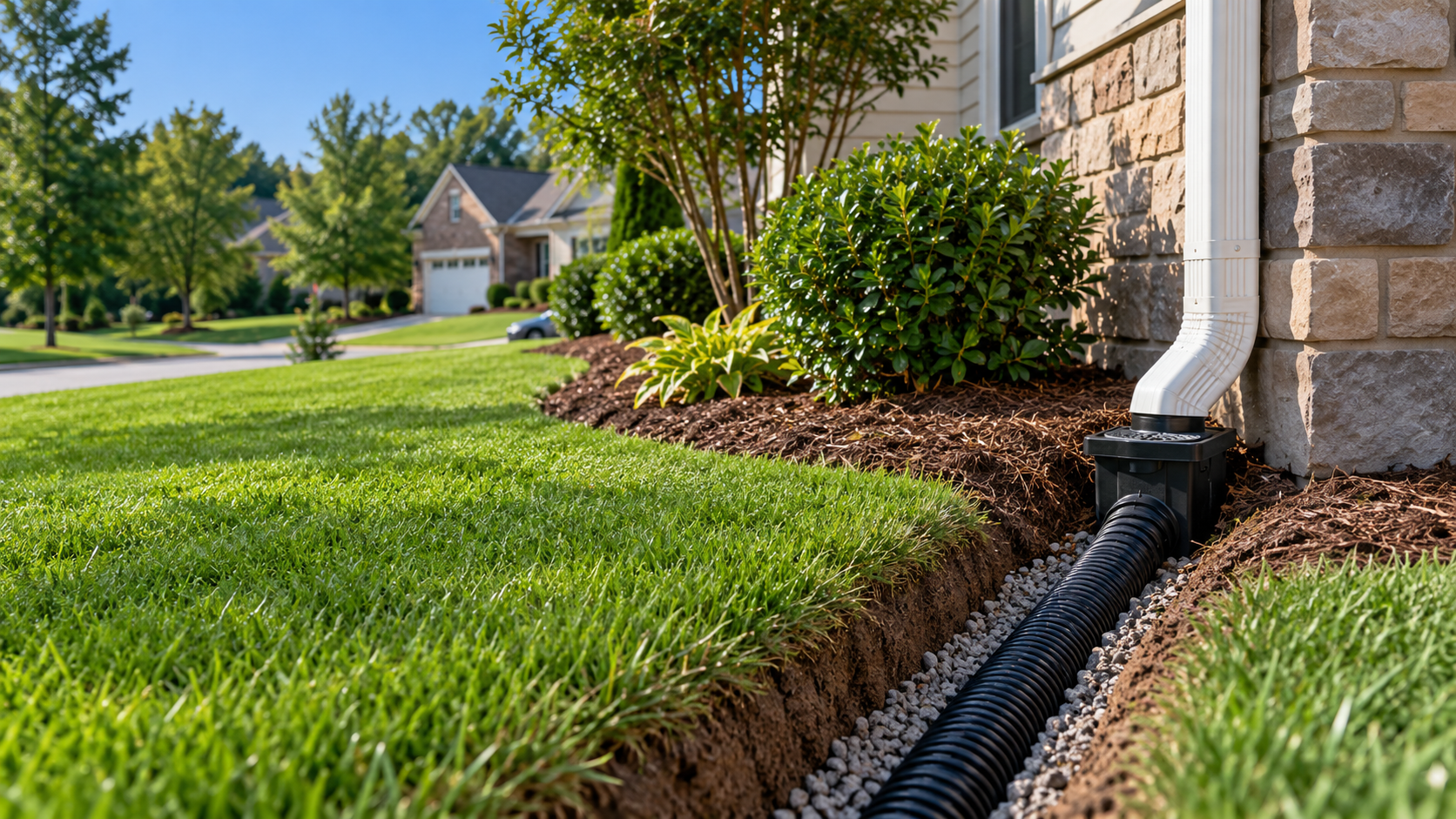
Downspout Drainage in Rock Hill, SC
Underground downspout drainage for roof runoff, foundation-area water, erosion, soggy yards, and drainage problems in Rock Hill, SC and surrounding areas.
Downspout Drainage in Rock Hill, SC
If you need downspout drainage in Rock Hill, SC, roof runoff around the home can often be redirected away from foundations, low areas, and other problem spots. Water discharged too close to the home can contribute to erosion, soggy soil, standing water, and repeated moisture problems around the property.
Carolina Yard Drainage helps connect homeowners in Rock Hill, SC and surrounding communities with solutions for underground downspout drainage problems. The appropriate drainage route depends on where roof water is currently being released, how the property is graded, and where runoff can be safely discharged.
Signs You May Need Downspout Drainage
Downspout drainage is most useful when concentrated roof runoff is contributing to water problems around the home. Common signs include:
- Water collecting near the foundation after rain
- Downspouts discharging directly beside the house
- Soil erosion or washout below downspouts
- Soggy areas near gutter discharge points
- Roof runoff flowing across walkways or patios
- Water moving from downspouts into low areas of the yard
- Mulch or landscaping repeatedly washing away during storms
Not every drainage problem near a house is caused by downspouts. Poor grading, groundwater, or surface runoff from another part of the property may also contribute. The goal is to determine how much of the problem comes from roof water before choosing the drainage solution.
How Underground Downspout Drainage Works
Underground downspout drainage connects the gutter downspout to buried drainage pipe. Instead of releasing roof water at the base of the house, the pipe carries that concentrated runoff away from the foundation and toward a more suitable discharge point.
Proper slope, pipe routing, connections, outlet placement, and system capacity all affect performance. The drainage line should move water away from the structure without simply transferring the problem to another part of the yard.
Downspout Drainage Installation Process
1. Evaluate Roof Runoff and Problem Areas
The first step is identifying where roof runoff is being released, where water is collecting, the slope of the property, nearby foundation conditions, and potential drainage routes.
2. Plan the Underground Drainage Route
The drainage line is planned around the property grade and the location of an appropriate outlet. The route should provide enough fall for water to move efficiently through the buried pipe.
3. Connect the Downspouts
Downspouts are connected to the underground drainage system so roof runoff enters the buried pipe rather than discharging beside the foundation.
4. Route Water to a Suitable Discharge Area
The system carries collected roof runoff to a location where the water can be released without creating erosion, standing water, or another drainage problem elsewhere on the property.
Where Downspout Drainage Works Best
Underground downspout drainage is especially useful when roof runoff is being released into areas where water should not be concentrated. Depending on the property, it may help with:
- Water collecting beside foundations
- Downspouts emptying into poorly drained areas
- Erosion below gutter discharge points
- Roof runoff crossing patios or walkways
- Soggy lawn areas caused by concentrated roof water
- Downspouts draining toward neighboring low areas
- Runoff contributing to standing water elsewhere in the yard
Downspout Drainage and Rock Hill Rainfall
Heavy rainfall can send a large amount of water from a roof into a relatively small area of the yard. When several downspouts discharge near the home or onto compacted soil, runoff can overwhelm the surrounding ground and begin moving across the surface.
Homes around Rock Hill can also have sloped lots, low areas, clay-rich or compacted soils, and neighboring runoff that make concentrated roof water more difficult to manage. Routing downspouts underground can help separate roof runoff from other drainage problems and provide a more controlled path away from the house.
Downspout Drainage vs. Other Yard Drainage Solutions
Underground downspout drainage is designed specifically for concentrated roof runoff. Other drainage problems may require a different approach.
Downspout Drainage
Best suited for carrying gutter and roof runoff away from the home through buried drainage pipe.
Catch Basins
Useful for collecting surface runoff at a defined low point where water naturally pools.
French Drains
Generally better for managing groundwater and excess moisture moving through saturated soil.
Yard Grading
May be appropriate when the slope or shape of the ground causes surface runoff to move toward the home or collect in low areas.
Some properties benefit from combining downspout drainage with catch basins, French drains, or grading corrections when several sources of water contribute to the same problem.
How Much Does Downspout Drainage Cost?
The cost of underground downspout drainage depends on the number of downspouts being connected, drainage pipe length, excavation requirements, soil conditions, accessibility, property slope, and the distance to a suitable discharge point.
A site evaluation provides a more accurate estimate because the routing and outlet requirements can vary significantly from one property to another.
Why Choose Carolina Yard Drainage?
Property-Specific Routing
Downspout locations, property slope, low areas, runoff patterns, and available outlet options all help determine where underground drainage should be routed.
Focused on Safe Discharge
The goal is not just to move roof water away from the house, but to direct it toward an appropriate discharge area without creating another drainage problem.
Local Yard Drainage Service
Carolina Yard Drainage helps connect homeowners in Rock Hill, SC and surrounding areas with appropriate solutions for downspout and yard drainage problems.
Downspout Drainage FAQs
Should downspouts drain underground?
They can when roof runoff needs to be carried farther away from the home than a surface extension can reasonably provide. The underground line should have proper slope and a suitable outlet.
How far should downspouts drain away from the house?
There is no single distance that works for every property. The correct discharge location depends on the slope of the yard, foundation conditions, neighboring properties, and where water can safely be released.
Can underground downspout drainage clog?
Any drainage line can develop problems if debris or sediment enters the system or if the pipe is installed without proper slope. Keeping gutters and downspouts clear helps reduce the amount of debris entering the drainage line.
Can downspouts connect to a catch basin system?
In some drainage plans, roof runoff and catch basins can be routed through the same overall system. Pipe capacity, slope, and outlet conditions should be considered before combining water sources.
Will downspout drainage fix a soggy yard?
It can help when roof runoff is a major source of the moisture. If the yard remains wet because of groundwater, poor grading, or other runoff, additional drainage work may be needed.
Need Help With a Downspout Drainage Problem?
If downspout runoff is creating problems around your property, submitting an estimate request is a simple way to start the process of finding an appropriate drainage solution.