Learning how to fix a soggy yard starts with understanding why the ground stays soft or saturated long after rainfall. In Rock Hill, clay-rich soil, low areas, poor grading, roof runoff, and subsurface water can all contribute to wet ground that takes too long to dry.
Fixing a soggy yard starts with determining where the excess water is coming from and how it moves through the property. The appropriate solution may involve improving surface drainage, redirecting concentrated runoff, collecting water in low areas, or managing moisture moving through saturated soil.
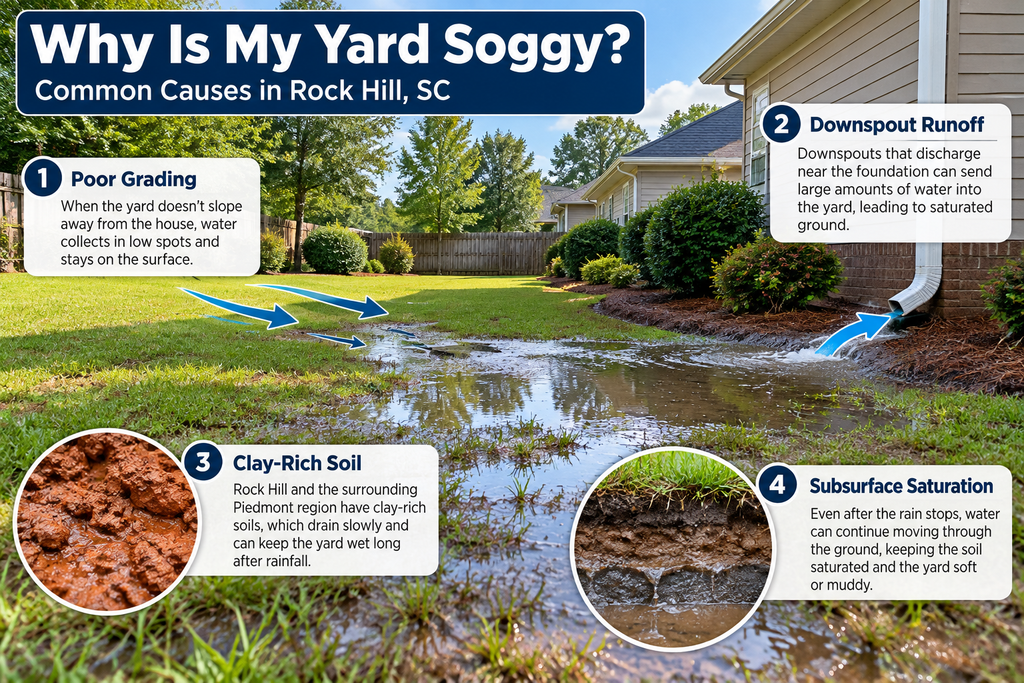
Why Does My Yard Stay Soggy After Rain?
A yard can stay soggy when water enters the area faster than it can drain away. Sometimes the problem is visible surface runoff collecting in a low spot. In other cases, the soil itself drains slowly or water continues moving through the ground after the rain has stopped.
How to Fix a Soggy Yard: Start With the Cause
- Clay-rich soil that drains slowly when saturated
- Low spots where rainwater and runoff collect
- Improper grading that directs water toward problem areas
- Downspouts releasing concentrated roof runoff into the yard
- Water moving downhill from higher areas of the property
- Subsurface moisture that keeps soil saturated after rainfall
How to Figure Out What Is Making Your Yard Soggy
One of the best ways to understand a soggy-yard problem is to observe the property during a heavy rain and again after the rain stops. The timing and location of the wet areas can provide clues about where the water is coming from and what type of drainage problem may be occurring.
Watch Where Water Flows During Rain
Look for runoff moving across the lawn, water flowing from neighboring or higher areas, and concentrated streams coming from driveways, patios, or other hard surfaces.
Check Your Downspouts
Watch where roof runoff is discharged. A downspout that releases a large amount of water near a low or poorly drained area can contribute to soil that remains saturated.
Look at the Slope of the Yard
Notice whether the ground directs water away from the house and toward a practical drainage path or whether runoff naturally collects in low areas.
See What Happens After the Rain Stops
If surface water disappears but the ground remains soft and saturated for an extended period, slow-draining soil or subsurface water may be contributing to the problem.
How to Fix a Soggy Yard
The right way to fix a soggy yard depends on why the area stays wet. Different drainage methods address different sources of water, so identifying the cause is important before choosing a solution.
Correct Poor Yard Grading
If runoff collects because the yard slopes toward a low area or toward the house, correcting the grade can help create a better path for surface water to move away from the problem area.
Install a French Drain for Saturated Soil
When water continues moving through the soil and keeps an area saturated, a French drain may help collect that water below the surface and redirect it toward an appropriate discharge point.
Use a Catch Basin for Concentrated Surface Water
A catch basin can collect surface water at a low point where runoff naturally gathers. The collected water can then be carried through underground drainage pipe to an appropriate outlet.
Redirect Downspout Runoff
If roof runoff is contributing to the soggy area, extending or routing downspout drainage underground can move concentrated water away from the problem area before it saturates the surrounding soil.
When a Soggy Yard Needs More Than One Drainage Solution
Some soggy-yard problems have more than one source of water. A low area may receive surface runoff during storms while also remaining saturated because the soil drains slowly. Roof runoff or water arriving from a higher part of the property can add even more water to the same area.
In these situations, one drainage method may address only part of the problem. For example, grading may improve the direction of surface runoff while a French drain manages water within saturated soil. A catch basin or downspout drainage system may also be used to intercept concentrated water before it reaches the wet area.
Combining drainage methods does not automatically make a solution better. The goal is to address the actual sources of excess water and provide practical paths for that water to leave the problem area.
Why Soggy Yards Are Common in Rock Hill, SC
Rock Hill and the surrounding Piedmont region commonly have clay-rich soils. Clay contains very fine soil particles and can drain slowly once saturated, which can cause wet areas to remain soft long after a storm has passed.
Clay soil can make an existing drainage problem more noticeable, but clay alone does not determine the solution. A yard with poor grading may still need better surface drainage, while another property may have water moving through saturated soil that requires a different approach.
Local topography also matters. Changes in elevation, low areas between properties, roof runoff, and water arriving from uphill can all influence where moisture collects and how long the ground stays wet.
What Not to Do When Trying to Fix a Soggy Yard
Quick fixes can sometimes hide the symptoms of a drainage problem without addressing where the excess water is coming from. Before adding material or installing drainage, it helps to understand how water is reaching the wet area.
Don’t Just Add More Soil to a Low Spot
Filling a wet area with soil may raise the surface temporarily, but it can also move the water problem somewhere else if the runoff path and surrounding grades are not considered.
Don’t Assume Every Soggy Yard Needs a French Drain
French drains can be useful for managing water within saturated soil, but they are not the appropriate solution for every wet yard. Surface runoff, poor grading, or concentrated downspout discharge may require a different approach.
Don’t Send Water Toward a Neighboring Property
Any drainage improvement should consider where the collected water will go. Redirecting runoff without an appropriate discharge path can simply transfer the drainage problem to another part of the property or toward neighboring land.
Soggy Yard FAQs
Why is my yard still soggy days after it rains?
A yard can remain soggy when clay-rich soil drains slowly, water collects in a low area, runoff repeatedly enters the same location, or moisture continues moving through the soil after rainfall has stopped.
Will adding topsoil fix a soggy yard?
Adding topsoil may help when it is part of a properly planned grading correction, but simply covering a wet area with more soil does not address the source of the water. The surrounding slopes and drainage path should also be considered.
What is the best drainage system for a soggy yard?
There is no single drainage system that works best for every soggy yard. Grading, French drains, catch basins, and downspout drainage address different water problems. The appropriate solution depends on where the water originates and how it moves through the property.
Can clay soil cause a soggy yard?
Yes. Clay-rich soil can drain slowly once saturated and may cause wet conditions to persist after rainfall. However, grading, runoff, downspout discharge, and subsurface water can also contribute, so soil type should be considered along with the overall drainage pattern.
Need Help With a Soggy Yard in Rock Hill, SC?
If your yard stays soggy long after rainfall, the next step is determining where the excess water is coming from and how it is moving through the property.
Carolina Yard Drainage helps connect homeowners in Rock Hill, SC and surrounding areas with drainage solutions for soggy yards, standing water, runoff, poor grading, downspout drainage, and other drainage problems. Submit an estimate request to start the process of finding an appropriate solution for your property.