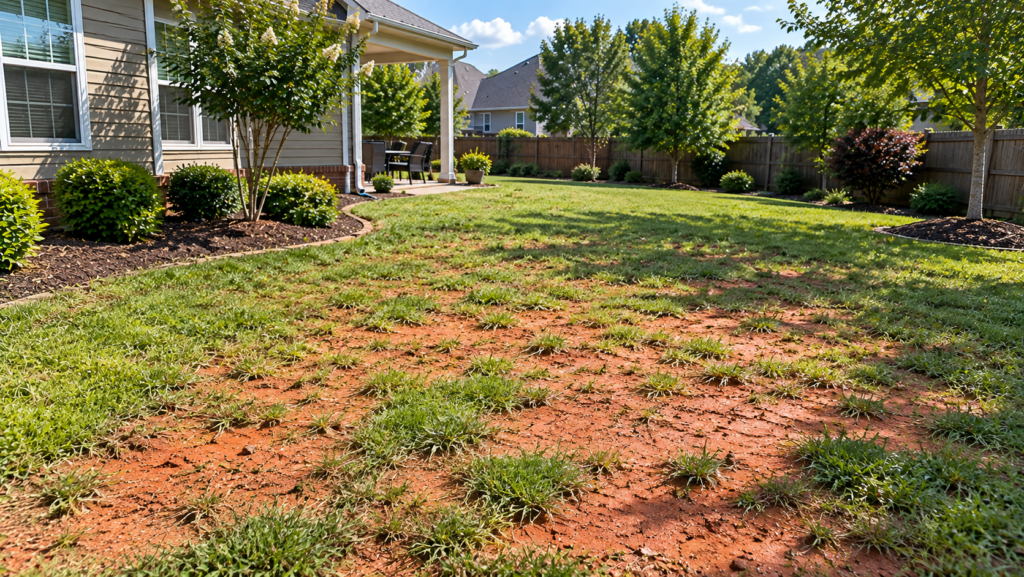
Clay Soil & Yard Drainage in Rock Hill, SC
Help for slow-draining clay soil, soggy yards, standing water, runoff, and drainage problems around homes in Rock Hill, SC and surrounding areas.
Clay Soil Drainage Rock Hill SC: Common Yard Problems
Clay soil contains very small particles that pack tightly together, which can make it difficult for water to move through the ground. After heavy rainfall, compacted or saturated clay can contribute to soggy areas, standing water, slow-draining low spots, and runoff that remains on the surface instead of soaking into the soil.
Carolina Yard Drainage helps connect homeowners in Rock Hill, SC with solutions for clay soil and yard drainage problems. The underlying cause may involve poor grading, concentrated runoff, roof drainage, groundwater, clay soil, or a combination of several factors.
Signs Clay Soil May Be Affecting Your Yard Drainage
Clay alone does not automatically mean a yard needs a drainage system, but it can make existing water problems more noticeable. Common signs include:
- Grass that stays soggy long after rainfall
- Standing water in low areas of the yard
- Soil that feels sticky or heavy when wet
- Hard, compacted ground when dry
- Water running across the surface instead of soaking in
- Muddy areas that are difficult to mow
- Slow-draining areas near foundations, patios, or walkways
- Repeated pooling in the same sections of lawn
Why Water Moves Slowly Through Clay Soil
Clay soil is made up of extremely small, tightly packed particles with limited space between them for water to move through. During heavy or prolonged rain, the soil can become saturated and absorb water more slowly, causing excess water to remain near the surface or move across the yard as runoff.
Compaction can make this worse. Foot traffic, construction activity, equipment, and repeated settling can reduce pore space in the soil even further. The result may be a yard that dries slowly after storms even when there is no obvious puddle.
Clay Soil Is Not Always the Real Cause
Clay soil can contribute to drainage problems, but its presence does not automatically mean it is the primary cause. A clay-heavy yard may drain reasonably well when the property has adequate slope and a clear path for runoff, while even a well-draining soil can stay wet when water is continually directed into a low area.
Problems often become more serious when clay soil is combined with low spots, poor grading, concentrated roof runoff, neighboring drainage, or groundwater. That is why the source and movement of the water should be evaluated before choosing a solution.
Which Drainage Solutions Work in Clay Soil?
The right drainage solution depends on how water is reaching the problem area, where it collects, how the property is graded, and where the water can safely be discharged. Clay soil affects how quickly water moves into the ground, but the drainage system still needs to address the actual source and path of the water.
French Drain Installation
French drains can be useful when excess moisture is moving through saturated soil or collecting below the surface. A properly installed system uses perforated pipe and stone to collect water and redirect it toward a suitable outlet.
Catch Basin Drainage
Catch basins are generally better suited for surface water that collects in a defined low point. They capture runoff through a grate and carry it away through underground drainage pipe.
Yard Grading & Drainage Correction
If water is flowing toward the house or settling into low areas, correcting the grade may be more important than installing a drain. Better surface slope can help runoff move away before it has a chance to sit on heavy soil.
Underground Downspout Drainage
When roof water is being discharged into slow-draining clay soil, downspouts can add a large amount of concentrated runoff to an already wet area. Buried drainage pipe can carry that water farther away from the home.
Some properties need a combination of these methods. For example, downspout drainage may reduce roof runoff while grading and a catch basin manage surface water in the yard.
Can Adding Topsoil Fix Clay Drainage?
Adding topsoil can help reshape a low area or improve surface grade, but simply spreading a thin layer over clay does not automatically solve a drainage problem. If water still has nowhere to go, it may continue collecting in the same area or move to another low spot.
The entire drainage path should be considered before adding soil. Elevation, slope, runoff source, and outlet location matter more than simply changing the top few inches of the yard.
Will Gravel Improve Clay Soil Drainage?
Loose gravel by itself does not necessarily fix a wet yard. A drainage system works because it collects water and provides a controlled route to an appropriate discharge point. Simply adding gravel to a wet area without a drainage path can leave the underlying problem unchanged.
Clay Soil and Rock Hill Drainage Conditions
Clay-heavy soils are common across the Rock Hill area and can become especially noticeable during periods of frequent or heavy rainfall. When clay becomes saturated, additional water may soak in slowly, collect in low areas, or travel across the surface as runoff—particularly on properties with compacted soil or limited slope.
That does not mean every Rock Hill yard needs the same drainage system. The important part is understanding how water enters the property, where it travels, and where it can be safely directed.
How Drainage Problems in Clay Soil Are Evaluated
1. Identify Where the Water Comes From
Rainfall runoff, downspouts, neighboring grades, low areas, driveways, patios, slopes, and saturated sections of lawn can all help identify likely water sources.
2. Determine Whether the Problem Is Surface Water or Groundwater
Surface water and groundwater behave differently. Identifying which type of water is causing the problem helps determine whether grading, a catch basin, a French drain, or another approach is more appropriate.
3. Evaluate the Existing Grade
The existing grade can help show whether the yard provides a natural path for runoff or whether water is being trapped in low areas or directed toward the home.
4. Match the Drainage Solution to the Cause
The goal is to address the source of the water rather than automatically installing a particular type of drain just because the property has clay soil.
Clay Soil & Yard Drainage FAQs
Does clay soil cause standing water?
Clay soil can contribute to drainage problems because its small, tightly packed particles allow water to move through the ground more slowly than many other soil types. Problems are more likely when clay soil is compacted, the yard has low areas or poor grading, or runoff is concentrated in one location. Clay soil may be part of the problem, but the entire drainage pattern of the property should be considered.
Will a French drain work in clay soil?
Yes, a French drain can work in clay soil when it is properly designed for the way water is moving through the property. It can be especially useful for intercepting subsurface water or draining consistently saturated areas. However, if the main problem is concentrated surface runoff, roof water, or poor grading, another solution—or a combination of drainage methods—may be more appropriate.
Can grading help a clay yard drain better?
Yes. Grading can improve drainage when clay soil is combined with low spots or slopes that direct runoff toward problem areas. Creating positive drainage can help surface water move toward a suitable outlet instead of remaining on the yard. Depending on the property, grading may be used alone or combined with a catch basin, French drain, or another drainage system.
Should I add sand to clay soil for drainage?
Adding sand to clay soil is generally not a reliable way to solve a yard drainage problem. Mixing small amounts of sand into clay can create a dense, compacted mixture rather than significantly improving drainage. If excess water is caused by poor grading, concentrated runoff, low areas, or saturated soil, correcting the way water moves through the property is usually more effective than trying to amend the soil with sand.
Why is my clay yard still wet days after rain?
Clay soil absorbs and releases water slowly, so saturated areas can remain wet longer after rainfall. The problem can become worse when the yard has low spots, compacted soil, poor grading, concentrated downspout discharge, or runoff entering from other areas. Identifying where the excess water is coming from helps determine whether the solution should address the soil, surface drainage, grading, or a combination of factors.
Need Help With Clay Soil Drainage?
If clay soil is causing standing water, soggy ground, or groundwater around your property, submitting an estimate request is a simple way to start the process of finding an appropriate drainage solution.